
U Visa Lawyer - Victim of Crimes Immigration Attorney
- 15+ Years Experience
- Bilingual Services (Spanish/English)
- Free Evaluation
- Family-Centered Approach
Facing a crime can leave you feeling overwhelmed and unsure of your next steps, especially as an immigrant. At Alonso & Alonso, we understand just how life-changing these situations can be. Our skilled U Visa attorneys have helped people in this situation for more than 15 years, guiding victims of crimes through the U Visa process. Our immigration lawyers offer bilingual services in Spanish and English, and every discussion with us starts with a free evaluation.
If you or someone you care about needs help, we are here to listen and to act on your behalf. We handle challenging cases that many other lawyers turn down. Our team is prepared to stand by you, even when your situation seems too difficult for others to manage. Reach out to Alonso & Alonso Attorneys at Law to schedule a free evaluation with an experienced U Visa lawyer.
What is a U Visa?
A U Visa is a special legal protection for people who have been the victims of certain crimes in the United States. It was created so victims can come forward and help the police without being afraid of being deported. This support encourages more people to step up and report dangerous activity, making neighborhoods safer for all families.
Some of the primary benefits of getting a U Visa include:
- The visa protects you from deportation.
- If you are approved, you can work lawfully in the U.S. with a work permit.
- After three years on a U Visa, you may apply for a Green Card. This moves you closer to becoming a permanent resident.
- You can also include qualifying family members, like your spouse, kids, or parents, in some cases, so they also get protection and security.
If you think you may qualify for a U Visa, consult a U Visa immigration attorney as soon as possible.
U Visa Eligibility Requirements - Who Qualifies For a U Visa?
A U Visa is for people who have been harmed by specific crimes in the United States (or certain U.S. territories or military installations) and are willing to assist law enforcement officials. This visa helps protect victims, even if they do not have legal status. Below are some more specifics of the eligibility requirements:

You Are a Victim or a Family Member of a Victim
You must have suffered because of a particular crime. Certain family members whose Children were victims may also qualify. Immigrants who are not legally in the United States may apply, and your nonimmigrant status will not count against you at this initial stage.
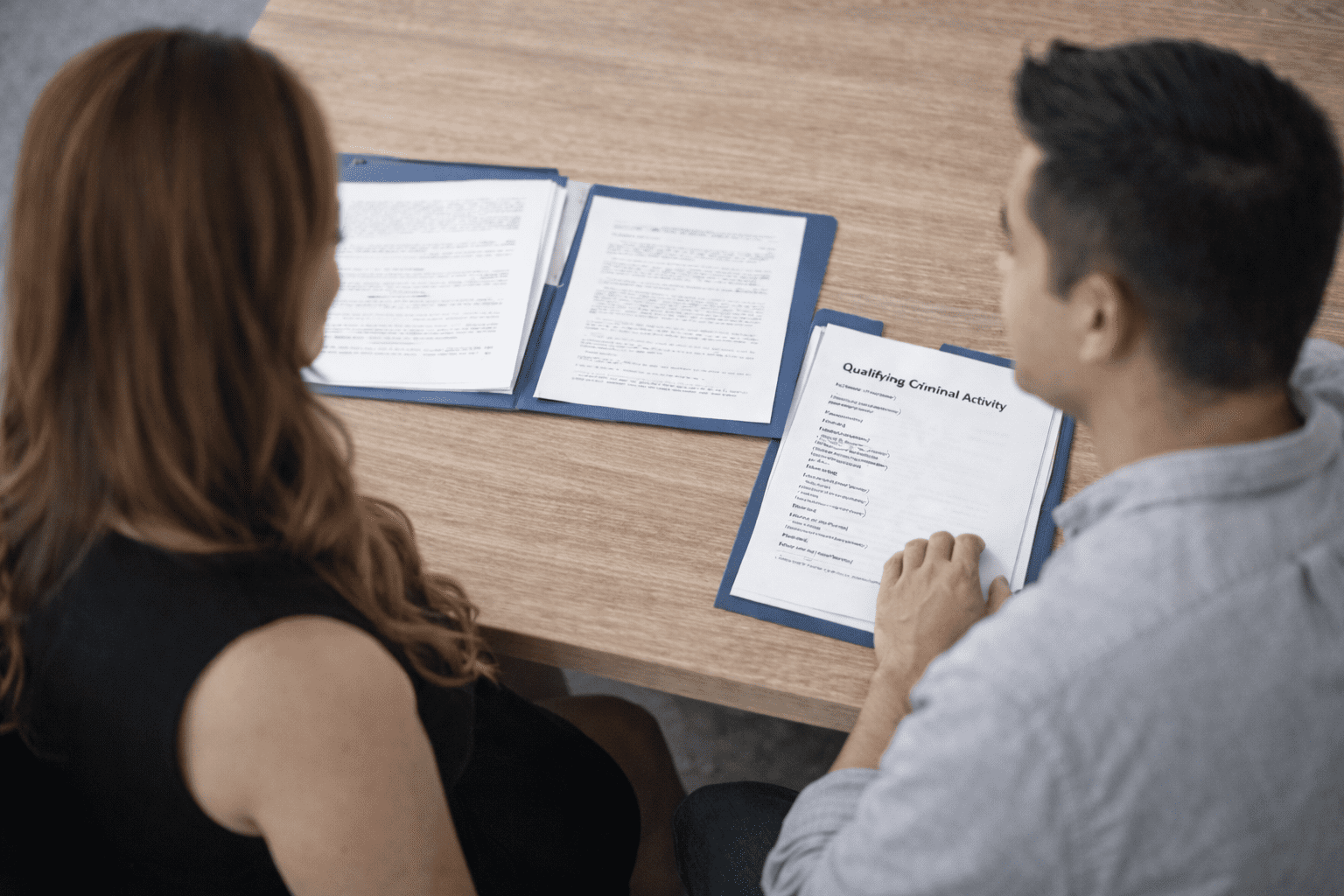
Qualifying Criminal Activity
Your case must involve one or more qualifying crimes. Common examples include:
- Domestic violence
- Rape
- Torture
- Sexual assault
- Human trafficking
- Abusive sexual contact
- Prostitution
- Involuntary servitude
- Extortion
- False imprisonment
- Felonious assault
- Blackmail
- Abusive sexual contact
- Peonage
- Witness tampering
- Perjury
- Obstruction of justice
- Stalking
- Certain other serious violent crimes
Substantial Harm
You have suffered physical or mental abuse from the crime.
Cooperation With Law Enforcement Agencies
You must be helpful to the police or prosecutors who are investigating or charging that crime. This means answering questions or providing documents. Many people worry about this step – this doesn’t necessarily mean you will have to testify in court.
Admissibility
To receive a U Visa, you must be allowed (admissible) to stay in the U.S. However, if you aren’t currently admissible, you may still qualify if you request and obtain a waiver for certain past problems.
If you are unsure about your situation or are intimidated by talking to law enforcement, it’s helpful to know that there are laws to protect your privacy throughout the process. Lack of official immigration papers does not mean you do not deserve safety or help.
Reach out to Alonso & Alonso today to learn more about your rights.
Crimes That Make You Eligible For a U Visa
If you are a victim of certain serious crimes and have helped or are willing to assist law enforcement, you may qualify for a U Visa. This visa is meant to protect people who have suffered mental or physical abuse because of criminal activity, whether the crime happened in violation of federal law or local or state laws. If you experienced one of these crimes or something very close to these, you could qualify.
- Abduction
- Abusive Sexual Contact
- Blackmail
- Domestic Violence
- Extortion
- False Imprisonment
- Female Genital Mutilation
- Felonious Assault
- Fraud in Foreign Labor Contracting
- Hostage situations
- Incest
- Involuntary Servitude
- Kidnapping
- Manslaughter
- Murder
- Obstruction of Justice
- Peonage
- Perjury
- Prostitution
- Rape
- Sexual Assault
- Sexual Exploitation
- Slave Trade
- Stalking
- Torture
- Trafficking
- Witness Tampering
- Unlawful Criminal Restraint
If the crime does not fit here word for word but looks very similar under your state or local laws, those often count as well. Attempting, trying to organize, or asking someone to commit these acts could also count as a qualifying reason.
Common Situations That Lead to U Visas For Immigrant Victims and Family Members
While there are clearly a variety of different crimes that can lead to a U Visa, there are some that are more common than others, including:
Domestic Violence
Many U Visa applicants are victims of abuse by a spouse or partner. Victims often feel scared to reach out for help due to fear of police or deportation. Any type of repeated, serious harm or threat in intimate relationships can be considered domestic abuse, including emotional abuse and threats.
Sexual Assault/Sexual Abuse
Any situation where someone is forced or intimidated into unwanted sexual contact (e.g., molestation, rape, abusive touching) qualifies. Both children and adults may seek help using the U Visa process.
Human Trafficking and Exploitation
People forced to work without pay or freedom may qualify. Trafficking for sex or labor, being held against your will, or forced marriage are all included among U Visa crimes.
Kidnapping and Restraint
This covers crimes where someone does not have the freedom to leave because they are being held without their consent.
Murder/Manslaughter
Surviving family members and direct witnesses who cooperate may be protected as well.
Sometimes states call crimes by different names. For example, “felonious assault” in federal law might be “aggravated assault” in your state. You can usually qualify as long as the crime you endured is basically the same and has similar elements. Any conspiracy, planning, or failed attempt to commit these listed offenses may also provide protection under U Visa arrangements.
The U Visa Application Process: A Step-by-Step Guide
Applying for a U visa can be a difficult experience for those who have suffered from a qualifying crime, such as domestic violence, assault, sexual offenses, or sex trafficking abduction. It can be scary and overwhelming, but help is always available. Below is an overview of the steps you’ll need to follow if you’re seeking this type of immigration relief.
Initial Consultation and Case Evaluation
Your first step is meeting with someone who specializes in assisting victims of crime, like the staff at Alonso & Alonso. The specialist will carefully evaluate the facts of your case, explain how immigration laws and U Visa benefits may apply, and determine if you (or derivative family members) appear eligible for a U Visa. Victims often fear talking to a lawyer about cooperating with law enforcement, but experienced U Visa attorneys keep client information private and will answer all your concerns.
Gathering Evidence and Documentation With Legal Assistance
Next, you begin collecting important documents that support your visa application. This might include medical records showing physical abuse, police reports, court records, statements explaining what happened, and anything showing how you cooperated with the police. Your immigration lawyer can help you identify supporting documents for your immigration case and ensure everything complies with US Citizenship and Immigration Services (USCIS) standards.
Obtaining Law Enforcement Certification
One of the main requirements for a U non-immigrant visa is getting a law enforcement official to sign Form I-918, Supplement B (Nonimmigrant Status Certification). This proves you have been helpful or will likely be helpful in the criminal investigation or prosecution. Only certain law enforcement officials, like a police officer, a federal or state judge, or child protective services, can complete this certification. A U Visa attorney can reach out to the appropriate certifying law enforcement agency on your behalf and make sure all the appropriate steps are taken to help you.
Preparing and Filing Form I-918 ( Petition for U Nonimmigrant Status)
With evidence and Law Enforcement Supplement B ready, you and your U Visa attorney prepare Form I-918 and all supporting documents. Those with certain violations (inadmissibility) may also complete Form I-192 seeking a waiver for immigration relief.
Applying for Work Authorization
Once your petition has been submitted, many applicants may qualify for an employment authorization document (work permit) while the government processes the application. Your immigration attorney or legal representation will file the correct paperwork for work authorization, allowing you to earn income and get social security benefits during the waiting period.
Waiting for Approval From US Citizenship and Immigration Services
The wait time for a U Visa approval can run from several months to several years due to caps on the U Visa program. If you are outside the U.S., you’ll follow extra steps with your nearest U.S. Embassy or Consulate, including fingerprinting and an interview. All case file addresses remain confidential for your safety – you or your immigration representation may provide a safe address apart from your home to keep sensitive information private.
Successful U Visa applicants obtain nonimmigrant legal status, enjoy many of the same immigration benefits as permanent residents, and may later apply for permanent residency (Green Card). Skilled visa immigration lawyers guide you every step of the way, protect your confidentiality, and can advise on including immediate family members in your U Visa application.
Including Family Members in Your U Visa Application
The U Visa doesn’t just protect you—it can help keep your loved ones safe, as you may be able to include certain family members in your application.
You can include your spouse and any unmarried children under 21. This means your husband or wife and your children can be added to your U Visa petition.
If You’re Under 21 When You Apply
If you are under 21 years old when you apply, the rules expand a bit. You can request a U Visa status not just for a spouse and children, but also for your parents. Immigrants younger than 21 can also apply for a U Visa for their unmarried siblings who are under 18 at that time.
Age-Out Protections
Families often ask what happens if a child or sibling has a birthday and ages out of eligibility during the process. This is important because U Visa cases can move slowly. Fortunately, immigration law tries to keep families together by providing what is known as age-out protection. This rule will “lock in” a child or sibling’s age when you initially filed your U Visa application or applied for them as your derivative. That way, if a dependent turns 21 or 18 while waiting, they still qualify.
If you have questions, don’t hesitate to contact the U Visa immigration lawyers at Alonso & Alonso—this process is too important to leave to chance.
Documents Needed for a U Visa Application
Anyone applying for a U Visa must follow the steps set out under current immigration laws. Having the paperwork is important, and filing the right materials makes a difference if you want protection, work visas, and, in some cases, the same benefits as those with permanent residency. As experienced immigration attorneys, we know this process can seem overwhelming, especially when documentation is hard to find.
Below is a breakdown of documents needed and tips on gathering records, especially those that can be difficult to obtain. If you ever feel stuck, our immigration attorneys can provide legal guidance and hands-on help building your case.
Personal Identification Documents
You must prove your identity. The types of personal documents you should add to your application include:
- Birth certificate
- Passport (if available)
- Government-issued identification, like a state ID card or driver’s license
- Marriage or divorce certificates, if applicable
If you no longer have original documents, try to obtain duplicates through national or state registries. Many countries provide certified copies if you make a request through an embassy or consulate. If documents are unavailable, your lawyer can help you figure out what to do.
Evidence of the Crime
U Visas are for victims of a criminal act, so you need proof of what happened. Documents showing physical or mental abuse can include:
- Police reports
- Copies of restraining or protective orders
- Dispositions or decisions from criminal courts
- Written warrants
Getting old police records or court papers isn’t always simple. If the incident happened years ago or somewhere outside of where you live now, immigration attorneys can often help you get proof of such crimes.
Medical Records Showing Injury or Trauma
If you suffered substantial physical injury, your file should prove it. You should provide evidence of mental abuse or psychological distress if applicable. You should gather:
- Hospital records dealing with injury or treatment after the crime
- Psychological evaluations, if you met with a counselor or therapist
- Letters or affidavits from doctors giving opinions about your health status during and after the incident
- Medical bills showing procedures or therapy needed for recovery
Law Enforcement Certification (Law Enforcement Certification – Form I-918B)
This document, Form I-918, Supplement B (I-918B), focuses on confirming your interaction with the authorities. To move your application forward, a local, state, or federal agency must sign off to show you helped law enforcement. Experienced immigration attorneys can help you with this step.
Evidence of Cooperation With Authorities
Under immigration laws, you have to prove that you were willing to help with the investigation and charging of the crime. This could include:
- Letters from police or detectives you worked with
- Emails referencing follow-up conversations about the case
- Statements about your reliable communication throughout the investigation
You do not have to find and obtain this information by yourself. A good immigration attorney with U Visa experience is here to explain your situation, connect with every agency or health provider, gather missing documents, and make your packet as thorough as possible.
Do You Need a U Visa Lawyer?
Applying for a U Visa as a victim of crime can be more complicated than many people realize. A lawyer has the experience to walk you through each step, making it easier to understand what’s expected from you.
Many immigration forms will ask for details in a specific way, and even small mistakes could lead to long waits or a denial. An immigration attorney knows how to present your story honestly, gives you a strategy for collecting supporting documents, and works directly with law enforcement for the required certification. By letting a qualified immigration lawyer handle your U Visa application, you seriously improve your chances of getting approved.
Choose Alonso & Alonso For Your U Visa Application
A law firm with deep experience stands out when you need support as a victim of a crime. At Alonso & Alonso, you’ll work with a team bringing over 15 years of experience in family-based immigration to the table. Our immigration attorneys have helped hundreds of families stay together, often in challenging cases with unusual situations or prior denials.
Communication should never be a problem. You’ll work with native Spanish-speaking legal professionals who are ready for questions, concerns, or complicated family histories you may be uncomfortable sharing elsewhere. The team approaches every situation with respect and understanding of cultural and family backgrounds. This combination of expertise and cultural awareness means your application isn’t just another file; you are treated with compassion while our team fights for the results you deserve. Call us at 1-855-663-4763 or send us an email at info@alonsoandalonsolaw.com to book your free evaluation!
U Visa Success Stories

They are so kind and understanding at this law firm. Every employee is happy to help you. I truly appreciate them, as we’ve been to many different lawyers and nobody can compare to the way they treat their clients. I love how they are consistent with calls and texts letting you know in which phase of the process that your case is in. Highly recommend their services. They were able to get my dad a work permit even when we thought it’d be near impossible!!
It’s been a pleasure working with the firm Alonso & Alonso , they have been keeping me updated about my case and answer all the questions that I may have. The whole staff have been amazing and super helpful thank you so much for your patience and for going above and beyond for your clients.
WIN.!!WIN.! WIN.!!!!!!They won my removal and deportation case. I could have get deported. It was an impossible case. Attorney Chris Alonso and his team is amazing. I am really thankful to the whole team of Alonso & Alonso Law firm. Now I can work freely and hopefully will get my green card soon. Throughout the process they were professional, honest and helpful. The way they presented my case in the court was simply professional, humble and proud of the their skills.
Thanks Alonso & Alonso Attorneys at Law, you saved my life and future.!🙏🙏
I’m very happy with their service. Best customer service. They keep you updated very well through out the process.
I am very happy to be a part of the Alonso and Alonso family. Very professional and attentive. They always keep me inform of how my case is going. I also love it that they take there time to review my case and make sure everything is right on point . I understand that this takes time to me it doesn’t matter how long it takes as long as my lawyer get me what will change my life . Thank you family for taking my case when no other lawyers would . Keep doing a great job and making our dreams come true. May god bless you Mr Chris and Vanessa and there professional team.
This team has been one of the most consistent, attentive and more with my case. They always answer my calls quick and have the patience for all of my questions;They inform me about everything so well . I’m glad to be a part of Alonso & Alonso law.
Book Your Free U Visa Consultation Today
If you’ve been a victim of a crime and are seeking help with your U Visa application, talking with a qualified lawyer can take a huge weight off your shoulders. Scheduling a free evaluation does not mean you’re locked into anything, but it gives you the chance to share your story and find out what comes next.
You can call us directly, fill out our online form, or use our live chat option to get started. A U Visa consultation is private and comes with no cost. We’ll listen, ask some follow-up questions, and tell you if you may qualify for a U Visa.
If we believe you are eligible for a U Visa and you wish to move forward with us, you’ll learn what steps usually come after. You can also ask about the timeline, fees, or whether your family qualifies for protection as well. We’re here to guide you every step of the way. Schedule your free evaluation today to learn about your immigration options and how we can help you.
U Visa Lawyer FAQs
Do I need to report the crime to the police for a U Visa?
You must cooperate with law enforcement and obtain a signed certification (I-918B). Reporting is typically necessary to secure that certification.
What if the police won’t give me a certification?
Without the police or prosecutor’s certification (Form I-918B), you usually cannot apply. However, a lawyer can help you explore options and speak with law enforcement on your behalf.
What if my U Visa application is denied?
You may be able to appeal, file a motion to reconsider, or reapply with new evidence, depending on your situation.
How long does it take to get a U Visa approval?
It often takes at least 5 years, but wait times change depending on family size, evidence submitted, and government backlog. You can usually still obtain protections and remain in the United States while the case is pending.
Can U Visa applications be rejected?
Yes. Missing documents, not cooperating with police, or past criminal records can cause denials.
Can a U Visa stop deportation?
A pending U Visa or approval can often pause removal proceedings, letting you stay in the U.S. legally while the petition is considered.
How much does a U Visa cost?
Filing the U visa itself is free, but you may pay for fingerprinting (biometrics) and other fees. Legal help will involve separate costs as well.

